

Mary Anne Walks for Research
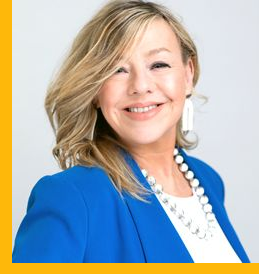
This week, we talked with Mary Anne Hallacy, facilities manager and facilities research support services program manager about her dual role and why she walks for research.
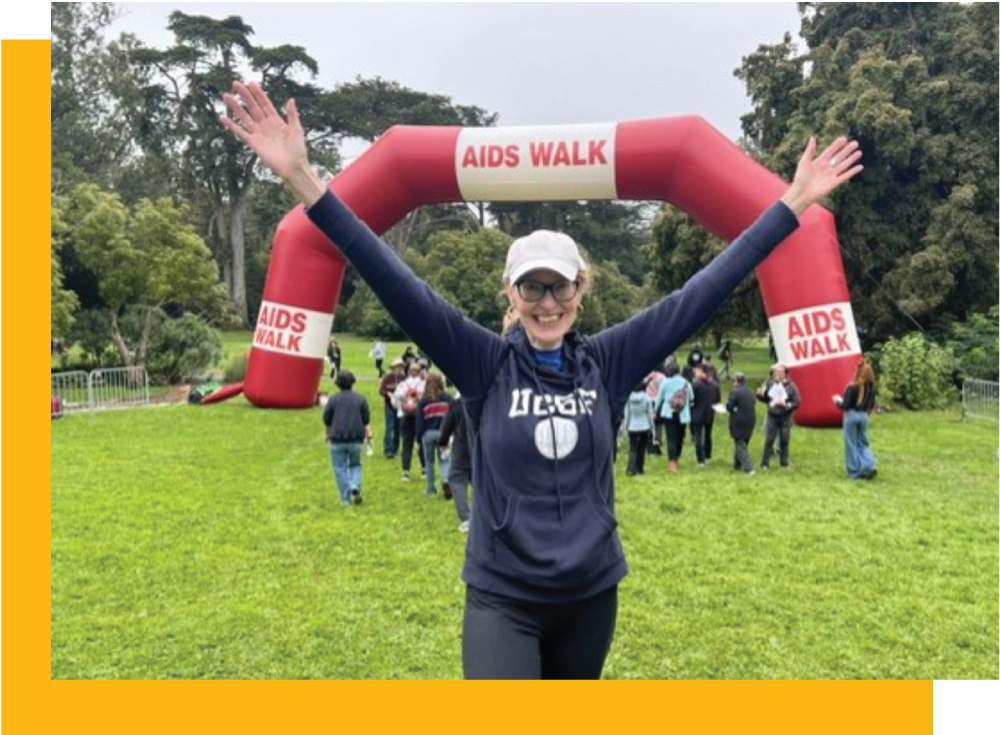
For me, it has always been about standing up, speaking up, advocating for others, and fighting fear with facts, compassion, and research.
Mary Anne Hallacy
Facilities Manager and Facilities Research Support Services Campus Life Services, Facilities Services
Mary Anne Walks for Research
Tell us about your career path.
I joined UCSF in late 2019 after spending nearly 19 years at UC Berkeley. Before Berkeley, I worked at the Exploratorium, where I created the Visitor Services Department and had the opportunity to work on National Science Foundation grants for accessibility in science museums. I recently celebrated 25 years of service in higher education.
Tell us about your role.
I serve in two roles: Facilities Manager and Program Manager for Facilities Research Support Services in Campus Life Services.
Behind the remarkable research at UCSF is an essential engine of support that spans communications, facilities, Environment, Health & Safety, and many other areas. The infrastructure behind both research and healthcare is incredibly important.
I try to approach facilities management by asking what it feels like to be sitting at a lab bench, caring for a patient at the bedside, or working as an administrator, and then work backward from there. Our job is to be almost invisible so that others can do their work and shine.
What’s something about your work that would surprise people?
My facilities portfolio includes clinical spaces, research areas, and administrative offices across several locations. Seeing patients and understanding the clinical environment reinforces how important empathy is in this work.
I tend to see connections. When someone submits a work order or raises a concern, I like to look beyond the immediate issue because there's usually something behind it. Those connections often reveal opportunities for process improvement.
It's also important that people know there's a human being on the other side of every email, phone call, inspection, or interaction. That has always mattered to me.
What makes UCSF special is its commitment to pushing the boundaries of science and changing lives. It's humbling to interact directly with people who are doing extraordinary work, not just for California but for the entire world.
How did you get involved in AIDS advocacy?
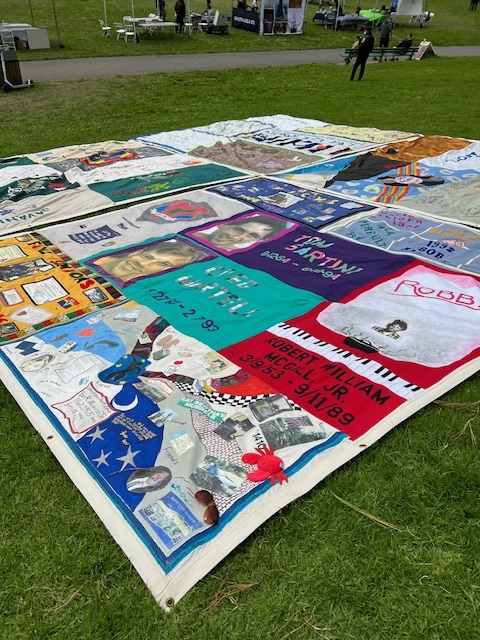
My first AIDS fundraiser was when I was in college in New York. At that time, people living with HIV and AIDS were often isolated, and there was widespread misinformation and prejudice, particularly around how someone contracted AIDS. I was involved with the Latin American Solidarity Committee, and we organized a fundraiser.
After moving to California, someone close to me was diagnosed with HIV in 1990. We didn't expect him to live very long, but he lived another 33 years because of research. He had access to clinical trials, new medications, and scientific advances that dramatically extended his life.
I’ve also had colleagues who were diagnosed with HIV. While I worked at the Exploratorium, we were part of a consortium of science museums and public health organizations that developed an exhibit called “What About AIDS?” that traveled to science museums around the country. UCSF was one of the partners. It was an incredible intersection of science communication and groundbreaking medical research that had a profound effect on me.
For me, it has always been about standing up, speaking up, advocating for others, and fighting fear with facts, compassion, and research. At the heart of it all, I simply wanted to do something that demonstrated love, compassion, and a sense of community.
How did you get involved in the AIDS Walk?
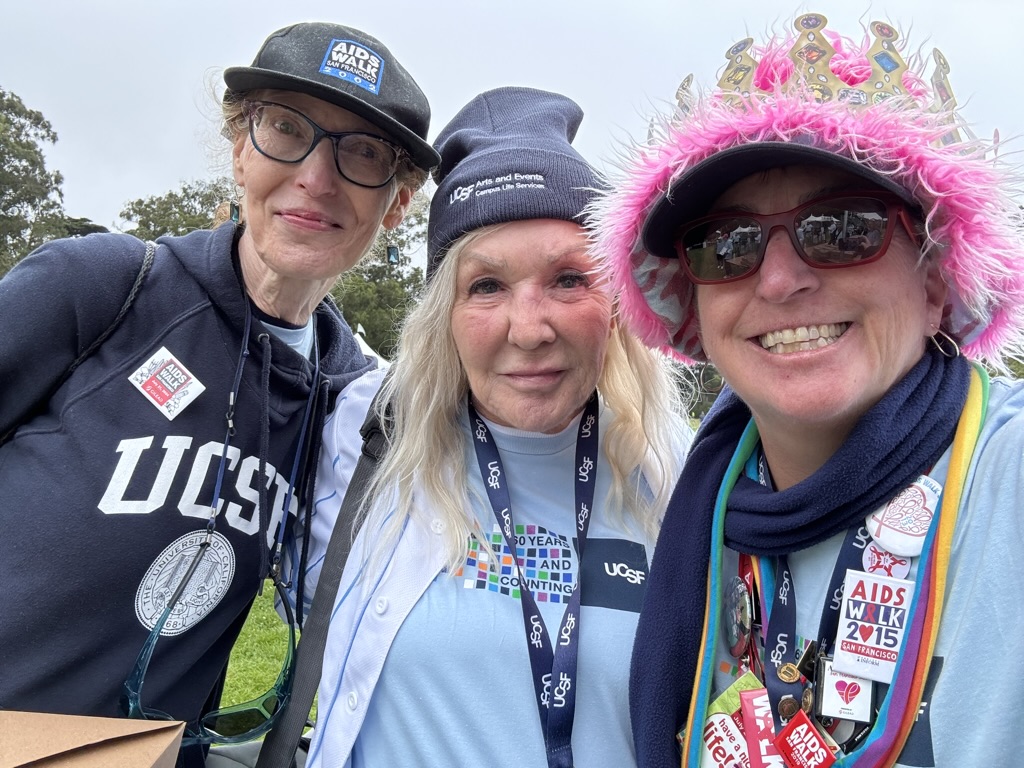
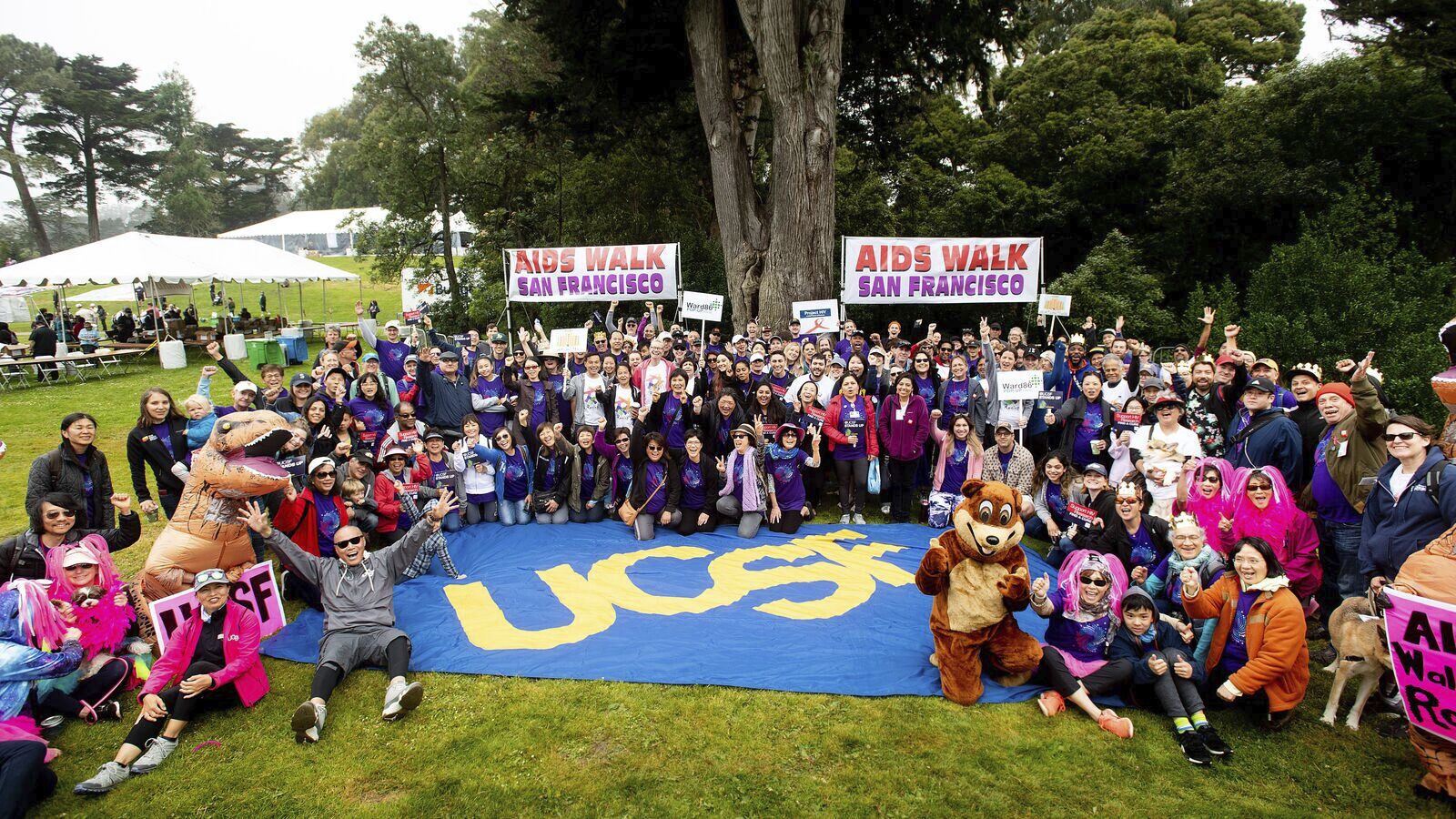
I've participated in the SF AIDS Walk since 1994. Last year I celebrated what I consider my 30th walk (due to COVID). One of my favorite parts of the AIDS Walk is meeting people who have participated for many years and hearing their stories. I also love meeting people who are participating for the first time. The sense of unity is powerful.
But, ideally, we would never need an event like this.
The walk also reflects how deeply I care about scientific research. I'm concerned about the erosion of support for scientific research in the United States and the worldwide consequences. I'm equally concerned about the loss of dignity and humanity that often accompanies those changes.
Every opportunity to explain why scientific research matters is important because its benefits belong to all of us.
FAVORITE COOKIE JAR TREAT
Lemon cake with lots of lemon icing (the icing is the most important part)

Have a good story idea? Contact Kim LaPean and sign up to receive the latest One Good Thing.
About One Good Thing
|
You like good news and we want to share more of what’s good with our FAS community. Read more One Good Thing stories. |