

Maga's Path to Resolving Conflict
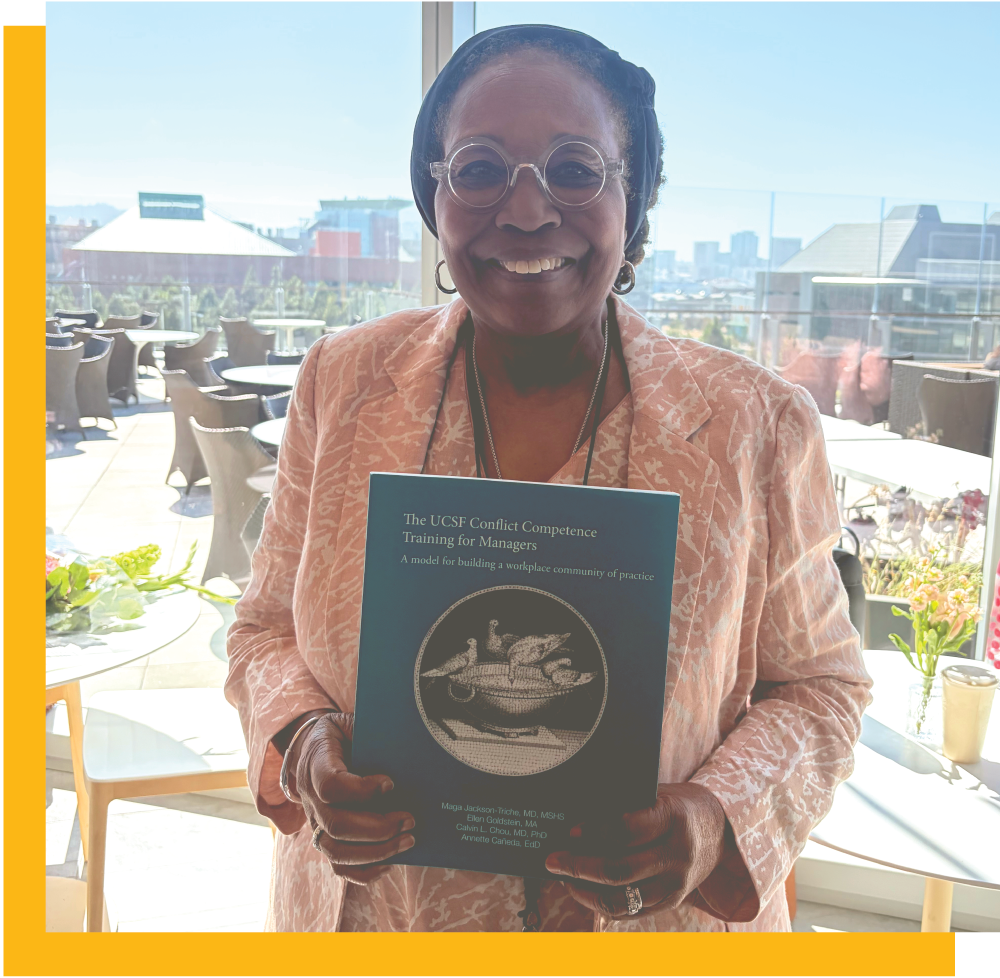
This week, we talked with UCSF Health Executive Advisor for Organization Work Culture Maga Jackson-Triche MD, MSHS, about a conflict competence course she designed and implemented with collaborators, Ellen Goldstein, MA, Calvin Chou, MD, PhD, and Annette Cañeda, EdD, which led to a newly published book
Managing conflict is a competency that can be developed. It's not magic. Sometimes, when it's done well, it can feel that way, but these are practical skills that people can learn and strengthen throughout their careers.
Maga Jackson-Triche MD, MSHS
Executive Advisor for Organization Culture, UCSF Health, Human Resources and Assistant Vice Chancellor, Office of Opportunity and Outreach Health Sciences Clinical Professor of Psychiatry
Maga’s Path to Resolving Conflict
Tell us about your role.
My official title is Executive Advisor, and my work is really about looking at the organization at both the enterprise level and the local level, with a particular focus on the workplace ecosystem. The on-the-ground workplace is where we all come together, administratively and clinically. I try to look at how those workplace relationships are functioning, what is working well, and what adjustments—sometimes small, sometimes significant—can mitigate or help improve the experience for everyone, including patients, staff, trainees, and visitors.
Tell us about the course you created.
In my role, one of my goals is to help change how we approach conflict in the workplace. That's why I proposed and developed the Conflict Competence course and wrote the proposal that ultimately became the foundation for the book, The UCSF Conflict Competence Training for Managers: A Model for Building a Workplace Community of Practice Around Conflict Competence.
The idea for the course grew directly out of my first year in this role. I spent that year assessing, talking with people, and reviewing data related to disciplinary actions, reports, and workplace incidents. Across many different situations, I found a common thread: conflict that either was not recognized, was not addressed effectively, or was not addressed at all because people did not feel prepared to handle it.
I started asking people what they did when conflict arose. Conflict is a natural part of being human, yet the response I heard repeatedly was, "We don't feel trained to deal with it. We don't know how."
Managing conflict is a competency that can be developed. It is not magic. Sometimes, when it's done well, it can feel that way, but these are practical skills that people can learn and strengthen throughout their careers. Our goal is to help participants become more flexible in how they respond to problems and to strengthen one of the most important skills of all: listening.
The course has been developed and taught collaboratively. Ellen Goldstein and Calvin Chou have led much of the instruction, with Annette Cañeda contributing as mentor and coach. My role has been to provide the overall framework and direction for the program. A key innovation of this course is the building of a workplace community of practice. Course participants are divided into peer groups where they have hands-on practice and establish long-term supportive collegial relationships. We've trained four cohorts so far, over three years. We're now preparing to scale so it can become a course available to all managers.
How did the idea of publishing the book come about?
We wanted a resource that would allow others to teach the course while preserving its core principles and maintaining the integrity of the curriculum. We invested a lot of time developing an evidence-based program, and we didn't want the course to lose its integrity and consistency as it expanded.
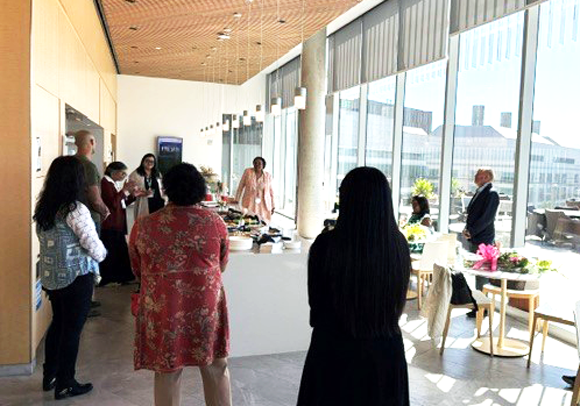
The desire to create more practitioners led to the idea of writing the book. It felt like the right next step. After going through all the steps to secure UCSF approval, fortunately, Brian Dolan, PhD, the Editor of the University of California Health and Humanities Press, agreed with the importance and value of creating a resource focused on conflict competence and agreed to publish it.
What advice would you give your colleagues about managing conflict?
It’s important to listen carefully without judgment or reaction. This is called reflective listening. We spend a great deal of time teaching people how to truly listen. Many of us are listening only long enough to formulate our own response, or we assume we already know what the other person is going to say. That means we aren't really hearing them. When you're not focused on preparing your next response, you have a much better chance of understanding what the disagreement is about from the other person’s perspective.
Another important lesson in the course is learning to identify the type of conflict you're dealing with. Not every conflict is personal. Sometimes it's about a disagreement over how work should be done. Sometimes it's about roles, responsibilities, or someone feeling that their status has been challenged.
Once people learn to recognize the different types of conflict, everything starts to make more sense. That's often the moment when the light bulb goes on. They realize there's a practical way to understand the situation and move it forward constructively.
I'm grateful for the chance to help spread the word because building conflict competence really does begin with conversation, practice, and community.
Download a free version of The UCSF Conflict Competence Training for Managers: A model for building a workplace community of practice - Facilitator’s Guide through the UC Health Humanities Press website.
FAVORITE COOKIE JAR TREAT
Panna cotta


Have a good story idea? Contact Kim LaPean and sign up to receive the latest One Good Thing.
About One Good Thing

|
You like good news and we want to share more of what’s good with our FAS community. Read more One Good Thing stories. |